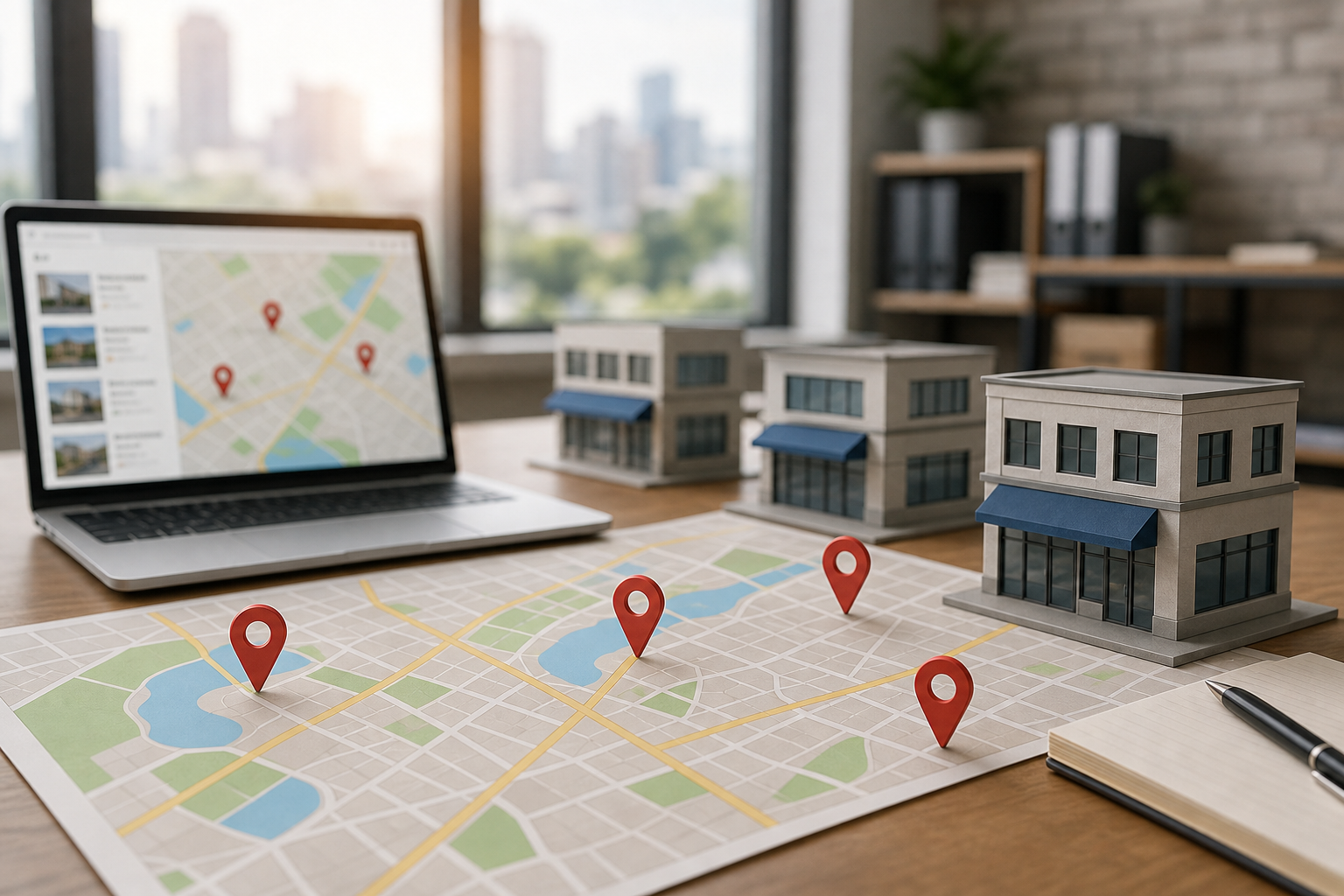
For healthcare clinics operating in Kolkata and across West Bengal, effectively presenting multiple neighbourhoods on your website can significantly enhance how patients find and choose your services. Whether your clinic serves areas like Garia, Salt Lake, New Town, Mukundapur, Jadavpur, or Howrah, thoughtfully structuring your location pages can help patients navigate options confidently and book appointments with clarity.
Many healthcare websites in the region face challenges by creating multiple location pages that differ only by neighbourhood name, while the core details—such as address, doctors, services, timings, and appointment procedures—remain the same. This approach can confuse patients about where consultations actually occur and which services are available at each site.
To create a patient-friendly and operationally manageable website, it is essential to evaluate each location page’s purpose, accuracy, and usefulness within the local context of Kolkata and West Bengal.
Start by separating a clinic location from a patient catchment area
Clarify the geographic claim each page makes. Typically, a clinic’s website may refer to at least three distinct place types:
- Actual clinic location: the physical address where consultation or treatment occurs.
- Consultation branch: a genuine secondary location where doctors or services are available on specific days or under particular conditions.
- Patient catchment area: neighbourhoods from which patients commonly travel to the clinic.
These categories are not interchangeable. For example, a specialist clinic based in Mukundapur may serve patients from Garia, Kasba, Jadavpur, and other parts of South Kolkata without having branches in those areas. A page implying a physical presence in Garia when none exists could mislead patients and create inaccurate local SEO signals.
The first audit question is therefore: What does this page claim about the clinic’s presence? If it suggests a branch, verify that there is a real address, contact details, consultation schedule, and service arrangement supporting that claim.
Decide whether the page has a genuine job
A location page should exist to help patients make a location-related decision, not simply because a neighbourhood name was identified during keyword research.
Summarize the page’s intended purpose in one sentence. For example:
This page helps patients considering consultation at the clinic’s New Town location understand the address, doctor availability, services, travel details, and appointment process.
This differs from:
This page attempts to attract anyone searching for a doctor in New Town, despite the clinic having no premises there.
A page is justified when location-specific details influence patient decisions. Useful differences include:
- A separate physical branch with its own address and map location.
- Different doctors or specialties available at different branches.
- Distinct consultation days, appointment routes, or service availability.
- Unique access information such as parking, lifts, landmarks, or building entrances.
- A genuine service-area model, for example, home visits or mobile healthcare within defined areas.
If none of these differences exist, a well-crafted central locations page or service-area section may be more effective than multiple near-identical pages.
Use an evidence test before keeping or creating a page
For every proposed or existing neighbourhood page, ask these five questions:
- Is the location real? Is there a physical clinic, branch, or clearly described service arrangement?
- Does location change the patient’s choice? Would the visitor decide differently based on travel, availability, access, or service details?
- Can the page contain accurate information? Is there enough verified detail beyond the locality name?
- Is the page operationally maintainable? Can reception update timings, doctors, and services when they change?
- Does the page have a clear next action? Can the patient call, request an appointment, or confirm the correct branch?
A “no” answer does not automatically mean the page must be removed. Instead, it may indicate a need for a different role, consolidation, or further evidence before retaining the page.
Audit the information patients need before travelling
Healthcare location pages serve as practical decision points. Patients often compare travel time, consultation availability, and the confidence that they have found the correct clinic. Each page should be reviewed for the following key information.
Address and access
Ensure the full address, locality, PIN code, building name, floor, landmark, and map link are accurate and clear. In Kolkata, a formal address alone may not suffice for first-time visitors. For example, clinics near EM Bypass, Salt Lake Sector V, or New Town may need to provide detailed directions about building entrances, nearby landmarks, parking, or access routes that affect the visit.
Avoid copying directions from one branch to another. Incorrect landmarks or access details can cause missed appointments and unnecessary calls.
Doctor and service availability
Patients should not have to assume that every doctor or treatment is available at every branch. Clearly display which doctors, specialties, or treatments are connected to each location. If consultations occur only on selected days, state this explicitly and explain how availability is confirmed.
For instance, a multi-location clinic might offer cardiology services at Salt Lake, orthopaedics at Mukundapur, and diagnostic services at both. Location and service pages should reflect these differences rather than presenting all branches as identical.
Timings and appointment conditions
Separate clinic opening hours from doctor consultation hours and appointment-booking hours, as these may differ. Also clarify whether online appointments, walk-ins, follow-ups, or emergency arrangements vary by location.
Avoid publishing response-time promises unless the clinic can reliably meet them. A simple statement such as “Appointment requests are reviewed during clinic working hours” is often more accurate than unsupported same-day guarantees.
Contact route
Each page should clearly indicate the next step for patients, whether that is a branch phone number, central reception, appointment form, booking system, or WhatsApp contact. Test every contact method on mobile devices to ensure functionality. A visible button is insufficient if it connects to the wrong number or if form notifications do not reach the responsible team.
Measure content quality by local usefulness, not word count
A useful location page does not need to be lengthy. It should answer questions that are genuinely different for that branch or service area.
Check for details such as:
- Reasons a patient might choose this location.
- Doctors and services available there.
- How consultation timings differ from other branches.
- Directions from recognizable local landmarks.
- Parking, lift, accessibility, or reception information where relevant.
- What patients should bring or prepare before visiting.
- What happens after submitting an appointment request.
These specifics are more valuable than generic claims about being the “best clinic” in a locality. Avoid unsupported promises, exaggerated treatment outcomes, or language implying suitability for every patient. Healthcare marketing should support patient decisions to enquire and not replace professional medical advice.
Check for duplication across neighbourhood pages
Open all location pages side by side in a comparison document or spreadsheet. Compare these fields:
| Area to compare | What to check |
|---|---|
| Primary purpose | Does each page answer a distinct location-related question? |
| Address | Is the physical location different and accurately labelled? |
| Doctors | Are doctors or consultation days genuinely different? |
| Services | Does service availability vary by branch? |
| Access details | Are directions, landmarks, parking, or building information unique? |
| Contact route | Does the patient reach the correct team or branch? |
| Patient action | Is the next step appropriate for this location? |
If the only differences are the H1, page title, and locality name, the website likely has a duplication issue. Repeated wording also increases maintenance risks, as updates to phone numbers or doctor schedules may not be consistently applied across pages.
Use a single strong page when information is genuinely shared. Maintain separate pages only when patient decisions, operational details, and enquiry routes differ materially.
Review the relationship between location, service, and doctor pages
Location pages should fit into a clear website structure that supports patient navigation:
Search or Google Maps → relevant service or doctor page → correct location page → appointment action
For example, a patient searching for a gastroenterologist might first need the doctor or specialty page, while a patient searching for a clinic near New Town might start with the branch page. Treatment pages should indicate which locations provide that treatment. These pathways should support one another without overwhelming the user with links to every location.
Check whether:
- Each branch page links to the services actually available there.
- Service pages identify the relevant clinic locations.
- Doctor profiles specify where consultations take place.
- The central locations page helps visitors choose a branch.
- Location pages lead to appropriate appointment or enquiry routes.
Internal linking should clarify relationships rather than create long lists of neighbourhood names. Ideally, the next page a patient needs should be reachable within one clear click.
Evaluate local intent without creating misleading pages
Local search behaviour in Kolkata often involves neighbourhoods such as Garia, Jadavpur, Tollygunge, Salt Lake, New Town, Rajarhat, Mukundapur, Behala, and Howrah. The importance of these areas varies depending on the clinic’s actual address, specialties, patient travel patterns, and branch structure.
Use local data to inform decisions rather than creating a page for every locality. Consider:
- Where existing patients or appointment enquiries originate.
- Which branches patients request during calls.
- Whether locality affects travel or appointment availability.
- Whether the clinic has a genuine service arrangement in the area.
- Whether the proposed page answers questions a central page cannot.
For example, a clinic in Salt Lake may serve patients from New Town without needing a dedicated New Town branch page. If patients frequently inquire about travel, the central location page could explain the Salt Lake address and nearby catchment areas. The wording should clearly distinguish: “Patients from New Town may travel to our Salt Lake clinic” versus “Our New Town clinic.”
Use a practical scoring framework
To prioritize your audit, score each location page from zero to two across six criteria:
- Accuracy: Are address, phone, hours, doctors, and services current?
- Distinctiveness: Does the page contain genuinely different or location-specific information?
- Patient usefulness: Does it answer practical questions before a visit?
- Service clarity: Do patients know which specialties or treatments are available?
- Conversion path: Does the correct call, form, WhatsApp, or booking route work?
- Maintainability: Can the clinic update the page when operations change?
This score serves as a decision aid rather than a ranking prediction. For example, a page with low accuracy or conversion scores requires immediate attention, even if its overall score seems acceptable. Conversely, a page with strong accuracy but no meaningful distinction might be better consolidated into a central locations resource.
Choose the right action after the audit
Apply the smallest change that effectively resolves the patient’s problem:
| Audit finding | Likely action |
|---|---|
| Real branch with distinct services and access details | Keep and improve the branch page. |
| Real branch but outdated information | Update the page, profiles, and contact routes together. |
| One clinic serving a wider catchment | Use a central location or service-area page; avoid implying multiple branches. |
| Several pages contain the same information | Consolidate or differentiate them based on genuine operational differences. |
| Page attracts the wrong expectation | Clarify the actual clinic address, service model, and appointment process. |
| Page has relevant visits but few enquiries | Test mobile usability, trust information, contact routes, and reception handling. |
Avoid automatically redirecting every weak page to the homepage. First, verify whether patients may be looking for that URL, whether it receives useful traffic, whether it is linked elsewhere, and whether a more relevant replacement exists. The page that remains should answer the visitor’s likely question rather than merely absorbing the URL.
A clinic location-page audit checklist
Before approving a location page, confirm the following:
- The page clearly states whether it represents a branch, clinic, or service area.
- The address and map location are genuine and current.
- The phone number reaches the correct reception or branch team.
- Doctor, specialty, and service availability are accurate.
- Consultation hours are separate from general clinic hours.
- Directions and access information are specific to the location.
- The page contains useful local information rather than repeated locality wording.
- The page does not promise medical outcomes or make unsupported claims.
- The mobile experience makes calls and appointment actions easy.
- Forms, booking links, and WhatsApp routes have been tested.
- The page links naturally to relevant doctor and service information.
- The clinic has an owner and process for updating the page.
Conclusion
Determining the appropriate number of clinic location pages for a healthcare website serving Kolkata and West Bengal depends on the genuine location-based decisions your website needs to support.
Retain a page when it represents a real branch or service arrangement and provides distinct, accurate information about doctors, services, timings, access, and appointments. Use a central locations or catchment-area page when the clinic has one actual address but serves patients from multiple parts of Kolkata. Consolidate pages that differ only by locality name without meaningful operational differences.
Begin with a comprehensive inventory of all existing location URLs. Verify operational details with the clinic team, compare pages side by side, test every contact route on mobile, and assign responsibility for future updates to a specific person. This audit will guide whether your next priority is improving a branch page, consolidating duplicate content, correcting local information, or enhancing the enquiry journey.
For clinics in Kolkata seeking expert assistance with local SEO and website structuring, BrandOrbs offers tailored services to improve Google visibility, Google Business Profile rankings, and qualified patient enquiries. Our experience with healthcare marketing in Kolkata ensures your location pages and digital presence align with patient needs and local search behaviour. Learn more about our Local SEO services in Kolkata and how we can help your clinic connect with patients effectively.